
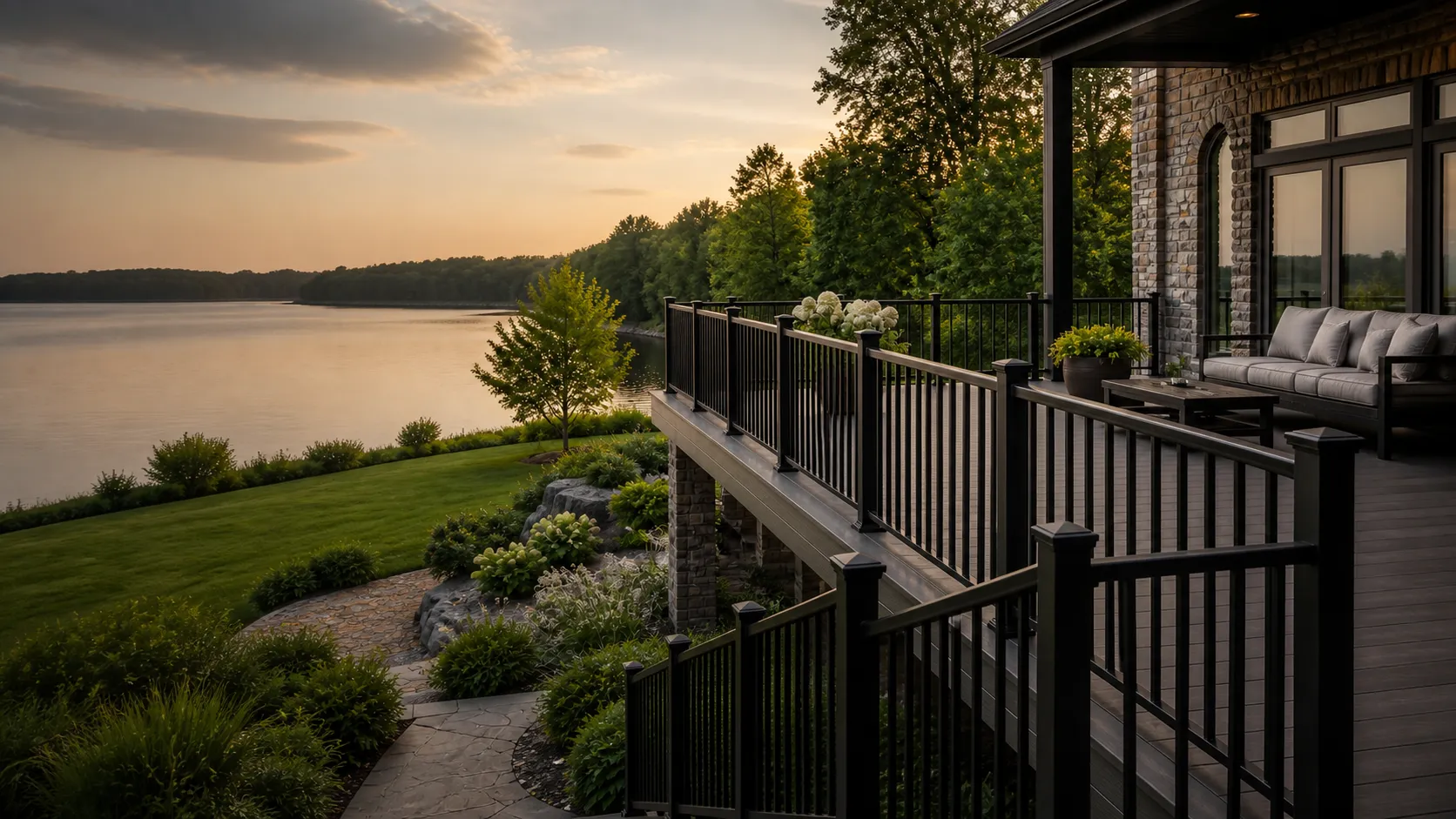
When choosing a railing system for a residential, commercial, or architectural project, material selection can have a major impact on durability, maintenance, appearance, installation, and long-term cost.
Aluminum railings have become a popular choice for balconies, decks, stairways, terraces, walkways, commercial buildings, and outdoor spaces because aluminum combines strength, corrosion resistance, design flexibility, and relatively low maintenance requirements.
Compared with traditional materials such as steel, wood, and some other railing materials, aluminum can provide a practical balance between performance and appearance.
But what makes aluminum railing systems suitable for so many different applications?
Here are 10 key benefits of aluminum railings to consider for your next residential or commercial project.
10 Key Benefits of Aluminum Railings
1. Lightweight but Strong
One of the most important advantages of aluminum railings is their excellent strength-to-weight ratio.
Aluminum is significantly lighter than many steel railing systems while still providing the structural performance required for a wide range of railing applications.
The relatively low weight of aluminum can make transportation, handling, fabrication, and installation more convenient, especially for projects involving long railing sections or elevated structures.
For contractors and installers, lighter components can also simplify on-site handling and reduce the need for heavy lifting equipment in certain applications.
At the same time, properly engineered aluminum railing systems can be designed with appropriate profiles, connections, and mounting structures to meet the requirements of specific projects.
This makes aluminum suitable for applications such as:
- Residential balconies
- Stair railings
- Deck railings
- Commercial walkways
- Rooftop terraces
- Apartment buildings
- Hotels and resorts
- Public and architectural spaces
The key is not simply the material itself, but the engineering of the complete aluminum railing system.
2. Excellent Corrosion Resistance
For outdoor railing applications, corrosion resistance is one of the most important considerations.
Unlike carbon steel, aluminum naturally forms a thin oxide layer on its surface when exposed to air. This oxide layer helps protect the underlying metal from further oxidation.
This makes aluminum particularly suitable for outdoor environments where railings may be exposed to:
- Rain
- Humidity
- UV exposure
- Temperature changes
- Coastal environments
- Poolside environments
- General outdoor weather conditions
Additional surface treatments can provide another layer of protection and improve the appearance of aluminum railing components.
Depending on the project requirements, aluminum railings can use surface finishing options such as powder coating and anodizing.
For projects in demanding environments, selecting the appropriate alloy, design, surface treatment, and installation method is important for long-term performance.
3. Low Maintenance Requirements
Another major benefit of aluminum railings is their relatively low maintenance requirements.
Wood railings may require regular painting, staining, sealing, or other maintenance to protect the material from moisture and weather exposure.
Steel railings can require maintenance to control corrosion, particularly when protective coatings are damaged.
Aluminum railing systems generally require less routine maintenance.
In many applications, regular cleaning with appropriate methods can help maintain the appearance of the railing system.
This can be particularly valuable for:
- Apartment and condominium buildings
- Hotels
- Commercial properties
- Public facilities
- Residential properties
- Coastal projects
- Large-scale developments
Lower maintenance requirements can also help reduce the long-term labor and maintenance burden for property owners and facility managers.
4. Long Service Life
A railing system is a long-term architectural component, so durability matters.
Aluminum’s combination of corrosion resistance, weather resistance, and stable performance makes it suitable for many long-term residential and commercial applications.
However, service life does not depend on the material alone.
The overall performance of an aluminum railing system can be affected by:
- Aluminum alloy selection
- Profile design
- Wall thickness
- Connection design
- Fasteners and hardware
- Surface finishing
- Installation quality
- Environmental conditions
- Regular maintenance
For this reason, choosing a manufacturer that understands both aluminum extrusion and railing system engineering can be important for demanding projects.
A well-designed system can provide reliable performance while maintaining its architectural appearance over many years.
5. Flexible and Customizable Designs
Aluminum is highly suitable for architectural customization.
Aluminum profiles can be extruded into different shapes and dimensions, allowing manufacturers to develop profiles for specific railing applications.
This flexibility gives architects, contractors, developers, and distributors more options when designing railing systems.
Depending on the project, aluminum railings can be designed with:
- Horizontal or vertical balusters
- Glass panels
- Cable systems
- Decorative panels
- Different handrail profiles
- Different post configurations
- Surface-mounted systems
- Side-mounted systems
- Custom brackets and connectors
This makes aluminum suitable for both traditional and contemporary architectural styles.
For projects with specific dimensions or structural requirements, custom aluminum railing profiles and components can also be developed according to project drawings.
6. Wide Range of Colors and Surface Finishes
A railing system needs to perform well, but appearance is also important.
Aluminum provides a wide range of surface finishing possibilities, allowing railing systems to match different architectural styles and building facades.
Common finishing options include:
Powder Coating
Powder coating provides a durable architectural finish and is available in a wide range of colors.
RAL colors can be used for many projects that require a specific architectural color.
Anodizing
Anodized aluminum can provide a distinctive metallic appearance while improving surface properties.
It is commonly used when the natural appearance of aluminum is part of the desired architectural design.
Other Architectural Finishes
Depending on the project, manufacturers may also offer additional surface treatments and customized finishing solutions.
This flexibility allows aluminum railing systems to be specified for modern residential buildings, commercial developments, hotels, offices, and other architectural projects.
7. Easy Handling and Installation
Because aluminum is relatively lightweight, aluminum railing components can be easier to transport and handle compared with heavier railing materials.
This can be particularly useful when installing railings on:
- Upper floors
- Balconies
- Rooftops
- Staircases
- Large residential developments
- Commercial buildings
Many aluminum railing systems are also designed as modular systems consisting of posts, handrails, panels, brackets, connectors, and other components.
A properly designed system can simplify fabrication and installation by reducing the amount of on-site modification required.
For international projects, manufacturers can also provide installation drawings, component specifications, packaging solutions, and technical documentation to help contractors complete installation more efficiently.
8. Suitable for Indoor and Outdoor Applications
Another advantage of aluminum railings is their versatility.
The same basic material can be adapted for a wide range of interior and exterior applications.
Residential Applications
Aluminum railings can be used for:
- Balconies
- Decks
- Patios
- Staircases
- Porches
- Pool areas
- Terraces
Commercial Applications
They can also be used in:
- Hotels
- Apartment buildings
- Office buildings
- Shopping centers
- Restaurants
- Resorts
- Public buildings
- Industrial facilities
Architectural Applications
For architectural projects, aluminum railing systems can also be combined with other materials such as glass, cable, or decorative aluminum panels.
This allows designers to create different visual effects while maintaining the advantages of an aluminum structural system.
9. Cost-Effective Over the Long Term
The initial purchase price is only one part of the total cost of a railing system.
When evaluating different materials, project owners and contractors should also consider:
- Transportation
- Installation
- Surface finishing
- Maintenance
- Replacement
- Expected service life
Because aluminum is lightweight, corrosion-resistant, and relatively low-maintenance, it can offer favorable long-term value in many applications.
For large projects, the ability to manufacture standardized or customized aluminum profiles can also help optimize material usage and installation processes.
The actual project cost will depend on the railing design, aluminum alloy, profile dimensions, surface treatment, hardware, installation requirements, and project quantity.
Therefore, comparing the total lifecycle cost rather than only the initial material price can provide a more useful basis for project planning.
10. Aluminum Is Recyclable
Sustainability is becoming an increasingly important consideration in architectural and construction projects.
Aluminum is a recyclable material, and aluminum products can be recycled and reprocessed for future use.
This gives aluminum an advantage for projects where material lifecycle and resource efficiency are important considerations.
For architects, developers, and contractors working toward more sustainable building solutions, selecting durable materials that can be reused or recycled can form part of a broader sustainability strategy.
Of course, the environmental impact of a specific railing system also depends on factors such as raw material sourcing, manufacturing processes, transportation, product lifespan, and recycling practices.
Aluminum Railings vs. Other Railing Materials
Different railing materials have different characteristics. The right choice depends on the project’s environment, design requirements, budget, structural requirements, and maintenance expectations.
| Factor | Aluminum Railings | Steel Railings | Wood Railings |
|---|---|---|---|
| Weight | Lightweight | Generally heavier | Lightweight to moderate |
| Corrosion Resistance | Excellent | Requires corrosion protection | Vulnerable to moisture |
| Maintenance | Relatively low | Moderate | Generally higher |
| Design Flexibility | High | High | High |
| Surface Finishing | Powder coating, anodizing, etc. | Paint, powder coating, etc. | Paint, stain, sealers |
| Outdoor Applications | Excellent | Suitable with proper protection | Requires regular maintenance |
| Custom Profiles | Highly suitable for extrusion | Possible | Usually fabricated |
| Recyclability | Highly recyclable | Recyclable | Reusable/recyclable depending on condition |
This comparison does not mean that one material is suitable for every project. Project location, structural requirements, architectural style, local building codes, and budget should all be considered when selecting a railing system.
What Should You Consider When Choosing an Aluminum Railing System?
Choosing an aluminum railing is more than selecting a color or profile.
For a residential or commercial project, consider the following factors before placing an order:
1. Project Application
Determine whether the railing will be used for a balcony, staircase, deck, terrace, commercial building, or another application.
2. Installation Method
Common configurations include surface-mounted and side-mounted systems. The mounting method should be compatible with the actual structure.
3. Railing Height and Dimensions
The required railing height, post spacing, panel dimensions, and overall layout should be determined according to project requirements and applicable building codes.
4. Railing Infill
Depending on the design, the system may use:
- Aluminum balusters
- Tempered glass
- Cable
- Decorative aluminum panels
5. Surface Finish
Select the appropriate color and surface treatment based on the architectural design and environmental conditions.
6. Hardware and Connections
Posts, brackets, fasteners, connectors, and other accessories are essential parts of the complete railing system.
A manufacturer should be able to provide compatible components rather than treating the aluminum profile as an isolated product.
Custom Aluminum Railings for Different Projects
Standard railing systems can meet many common applications, but some projects require customized solutions.
For example, a project may require:
- Custom aluminum extrusion profiles
- Non-standard dimensions
- Special mounting structures
- Custom brackets
- Specific RAL colors
- Custom glass dimensions
- Special connection details
- OEM packaging
- Project-specific technical drawings
In these situations, working directly with an aluminum railing manufacturer can provide more flexibility than selecting standard components from a general building-material supplier.
A manufacturer with aluminum extrusion, CNC machining, surface finishing, and assembly capabilities can potentially manage more stages of the supply chain under one production system.
Why Choose YD Aluminum for Custom Aluminum Railings?
For projects requiring customized aluminum railing systems, YD Aluminum provides integrated manufacturing and project support for international customers.
Our capabilities cover aluminum extrusion, profile customization, CNC processing, surface finishing, railing components, and system development.
Custom Engineered Systems
We can develop customized aluminum profiles, mounting structures, and accessories according to project requirements.
Our support includes:
- OEM aluminum profile development
- Custom dimensions
- Project engineering support
- Customized railing components
- Technical communication based on project drawings
Premium Surface Finishing
Surface finishing plays an important role in both the appearance and durability of aluminum railing systems.
YD Aluminum provides finishing options including:
- AAMA-compliant powder coating options
- RAL color customization
- Anodized finishes
- Customized architectural finishing solutions
Global Export Support
For international projects, product manufacturing is only one part of the process.
YD Aluminum supports customers with:
- Technical communication
- Production follow-up
- Quality inspection
- Customized packaging
- Export logistics coordination
- Sample orders
- Large project orders
Whether you are an architect, contractor, distributor, developer, or railing system supplier, we can work with your project requirements to develop a suitable aluminum railing solution.
Get a Custom Aluminum Railing Solution for Your Project
The advantages of aluminum railings go beyond their lightweight construction.
With corrosion resistance, low maintenance requirements, design flexibility, customizable profiles, architectural finishing options, and recyclability, aluminum can be a practical material for a wide range of residential and commercial railing applications.
If your project requires a standard railing system, customized aluminum profiles, OEM development, or a complete railing solution, the right manufacturer can help you select and develop the appropriate system.
Have an aluminum railing project in development?
Contact YD Aluminum with your drawings, dimensions, railing requirements, or project specifications to discuss a customized solution.