
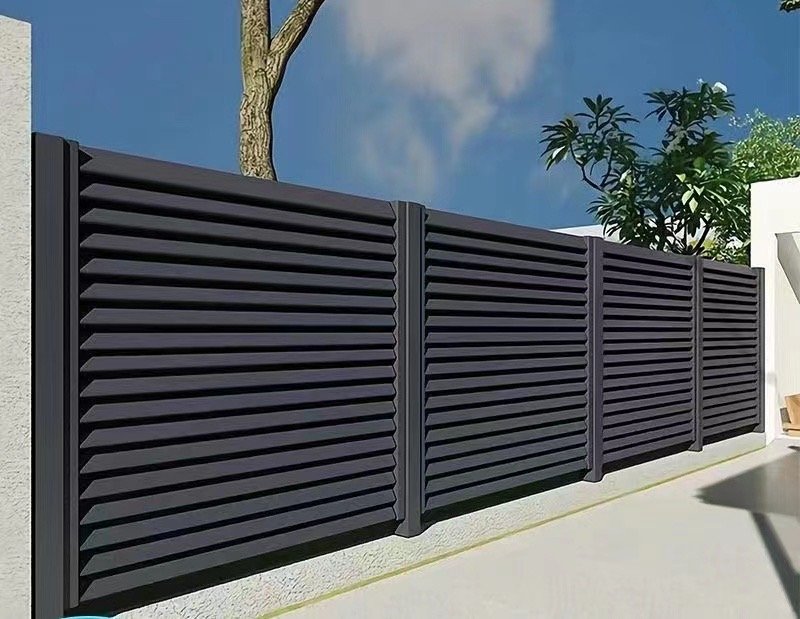
Choosing the best aluminum fence requires balancing aesthetics with technical specifications. To make an informed decision, you must evaluate the material grade, powder coating quality, picket and rail dimensions, fastener system, and overall style. These factors directly impact the fence’s strength, longevity, and resistance to environmental factors like corrosion.
The 7 Critical Factors for Selecting Your Fence
Selecting the right aluminum fence is a long-term investment in your property’s security and curb appeal. As engineers at YD Aluminum, we prioritize material science and structural integrity. our technical breakdown of the seven key factors you must consider.
- Material Grade and Alloy: Not all aluminum is created equal. Look for fences made from 6000-series alloys, specifically 6061-T6 or 6005-T5. These alloys offer an excellent combination of strength, corrosion resistance, and formability. The “grade” (Residential, Commercial, Industrial) is determined by the wall thickness (gauge) of the pickets, rails, and posts. Thicker walls mean greater strength.
- Powder Coating Quality: The powder coating is the fence’s primary defense against weathering and fading. Insist on a coating that meets AAMA (American Architectural Manufacturers Association) standards.
- AAMA 2603: Good, standard for many residential products.
- AAMA 2604: Better, offers 5x the performance of 2603. This is the minimum standard for high-quality fencing.
- AAMA 2605: Best, the highest standard for performance, typically used in coastal or high-UV environments.
- Construction & Fastener System: How the pickets attach to the rails is critical for long-term stability. Cheaper fences use exposed screws that can rust or loosen. Superior systems, like our Infinity Fence, utilize a hidden, screwless design that locks pickets into the rail, creating a stronger, cleaner-looking panel that won’t rattle or sag.
- Picket Spacing and Height: Standard picket spacing is typically 3-13/16″ to meet the “4-inch sphere” rule for building codes, especially for pool safety. Tighter “puppy picket” spacing (around 1-5/8″) is available at the bottom of the fence to contain small pets. Height is determined by your goal: 48″ is common for pools, while 60″ or 72″ offers more security.
- Gate Construction: Gates are the most-used and highest-stress part of any fence system. A quality gate should have welded corners instead of being screwed together. Welded construction prevents sagging and ensures the gate remains square and operates smoothly for years. Always check the gate hardware (hinges, latches) for quality and adjustability.
- Style and Aesthetics: While a personal choice, the style should complement your property. Classic spear-top designs offer traditional elegance and a degree of deterrence, while flat-top styles provide a clean, modern look and are often required for pool safety.
- Manufacturer Warranty: A strong warranty reflects the manufacturer’s confidence in their product. Look for a lifetime warranty that covers not just defects in workmanship but also the powder coating against cracking, peeling, or blistering.
YD Aluminum Pro Tip: In our lab tests at YD Aluminum, we found that the powder coating’s pre-treatment process is the single most important factor for long-term corrosion resistance, even more so than the coating thickness itself. A multi-stage chemical wash and conversion coating before powder application ensures maximum adhesion and prevents creeping corrosion if the fence is ever scratched.
What are the downsides of aluminum fences?
While highly durable and low-maintenance, aluminum fences have some downsides. They typically offer less visual privacy than solid wood or vinyl fences and can have a higher initial cost than some materials. Additionally, while strong, they are not as impact-resistant as steel, making them more susceptible to denting from severe force.
Comparing Material Limitations
The primary trade-off with aluminum is its strength-to-weight ratio. It’s incredibly strong for its weight, but it is not as dense as steel or iron. This makes it more prone to denting from a direct, heavy impact, such as from a vehicle or a large falling limb. Furthermore, the slatted design prioritizes security and views over complete privacy.
| Feature | Aluminum Fence | Steel Fence | Wood/Vinyl Fence |
|---|---|---|---|
| Impact Resistance | Good | Excellent | Poor to Good |
| Corrosion Resistance | Excellent | Fair (requires treatment) | N/A (subject to rot/warp) |
| Privacy Level | Low | Low | High |
| Maintenance | Very Low | Low to Medium | High (Wood) / Low (Vinyl) |
YD Aluminum Pro Tip: Our technicians often see damage from vehicle impacts or lawn equipment. While our Signature Grade fencing is incredibly robust for residential use, if you live on a corner lot with high traffic, we recommend upgrading to Commercial Grade posts for the sections facing the road to mitigate potential denting.
Who makes the best aluminum fence?
The “best” aluminum fence is made by a manufacturer who prioritizes material science, engineering, and quality control. Top-tier brands are distinguished by their use of high-strength 6000-series alloys, AAMA 2604/2605 certified powder coatings, robust internal fastener systems, and comprehensive lifetime warranties that are clearly defined.
Key Differentiators of Premium Manufacturers
When evaluating brands, look past marketing claims and focus on verifiable specifications. The best manufacturers are transparent about their materials and processes.
- Aluminum Alloy: Insist on 6005-T5 or 6061-T6 alloys for all structural components (posts, rails).
- Powder Coating Certification: The product should be certified to AAMA 2604 standards at a minimum. AAMA 2605 is the premier standard for harsh environments.
- Panel Assembly: Look for hidden fastener systems or channel-based construction. Avoid exposed steel screws, which are a primary point of failure and rust.
- Gate Construction: The best manufacturers offer fully welded gates for maximum strength and longevity, as opposed to mechanically fastened (screwed-together) gates.
- Warranty: Read the fine print. A true lifetime warranty should cover the finish against fading and chalking, not just manufacturing defects.
YD Aluminum Pro Tip: When we benchmark competitor products at YD Aluminum, the most common failure point is the screw connection between the picket and rail. These can loosen over time from vibration and thermal expansion, causing rattling. This is why we engineered our Infinity series with a patented no-screw system that locks components together internally, eliminating this weak point entirely.
Are there different grades of aluminum fencing?
Yes, aluminum fencing is manufactured in several grades to suit different applications and budgets. The primary grades are Residential, Commercial, and Industrial. These grades are defined by the thickness (gauge) and dimensions of the aluminum components, which directly correlates to the fence’s overall strength and durability.
Understanding Fence Grades
Choosing the correct grade is essential for ensuring your fence meets the demands of its environment. Using a residential-grade fence in a commercial application can lead to premature failure and may void the warranty.
| Grade | Typical Picket Size | Typical Rail Size | Best Use Case |
|---|---|---|---|
| Residential | 5/8″ sq. | 1″ x 1″ | Home perimeters, pool safety, light traffic areas |
| Commercial | 3/4″ sq. | 1-1/4″ x 1-1/4″ | Businesses, schools, public parks, high-traffic areas |
| Industrial | 1″ sq. | 1-5/8″ x 1-5/8″ | Security perimeters, airports, power stations, heavy-duty use |
YD Aluminum Pro Tip: For most homeowners, our Signature Grade (a robust residential+) is often the best value. It uses commercial-grade rail specifications with residential-grade pickets, providing a significant strength increase over standard residential options without the full cost of a commercial fence. It’s ideal for properties with children, large pets, or areas with high winds.
What type of fence adds the most value?
A high-quality, professionally installed aluminum fence often adds the most long-term value to a property. Its unique combination of timeless curb appeal, enhanced security, and extremely low maintenance is highly attractive to potential buyers. Unlike wood fences that require constant upkeep, an aluminum fence retains its appearance and function for decades.
Calculating Return on Investment (ROI)
The value of a fence isn’t just its initial cost, but its total cost of ownership and its impact on your property’s resale value. Aluminum excels in several key areas:
- Longevity: A well-made aluminum fence will not rust, rot, or warp, eliminating the need for costly replacement.
- Low Maintenance: There are no recurring costs for painting, staining, or sealing, unlike wood. A simple cleaning with soap and water is all that’s required.
- Curb Appeal: The elegant, classic look of an aluminum fence has broad appeal and complements a wide range of architectural styles.
- Security & Safety: A strong, code-compliant fence can provide peace of mind and may even lead to lower insurance premiums, especially if it secures a pool.
YD Aluminum Pro Tip: We’ve consulted with real estate agents who confirm that a black powder-coated aluminum fence is a timeless choice that maximizes resale value. While other colors are available, black offers the best contrast against landscaping and architecture, creating a high-end look that appeals to the widest range of potential buyers.
How does your wholesale pricing scale with order volume for different fence grades?
As a direct manufacturer, our wholesale pricing at YD Aluminum is structured with volume-based tiers. The discount percentage increases significantly with order volume, measured in linear feet. Commercial and Industrial grade fences have a higher base cost but follow a similar tiered discount model, rewarding larger commercial project orders.
YD Aluminum Wholesale Pricing Tiers (Conceptual)
Our pricing is designed to support our professional partners, from local installers to national contractors. While exact percentages are quote-dependent, the structure is transparent.
| Order Volume (Linear Feet) | Residential Grade Discount | Commercial Grade Discount |
|---|---|---|
| 500 – 1,499 | Tier 1 (e.g., -15%) | Tier 1 (e.g., -12%) |
| 1,500 – 4,999 | Tier 2 (e.g., -20%) | Tier 2 (e.g., -18%) |
| 5,000+ | Tier 3 (Contact for Custom Quote) | Tier 3 (Contact for Custom Quote) |
YD Aluminum Pro Tip: Our most successful contractors consolidate their smaller projects into larger quarterly or bi-annual orders to access higher discount tiers. We can offer phased deliveries to different job sites from a single bulk order. Contact a YD Aluminum sales engineer to model your potential savings with this strategy.
What are your typical lead times and shipping logistics for bulk commercial orders?
For standard bulk commercial orders, our typical lead time from final drawing approval to shipment is 4-6 weeks. For custom colors or profiles, this may extend to 6-8 weeks. We ship via LTL or dedicated full-truckload freight, with all materials meticulously palletized, shrink-wrapped, and edge-protected to ensure they arrive at the job site in perfect condition.
The Commercial Order Fulfillment Process
Our logistics are optimized to prevent job site delays and ensure a smooth installation process for our commercial partners.
- Quote & Design Approval: Your dedicated engineer finalizes all specs and drawings.
- Material Extrusion & Fabrication: Aluminum profiles are extruded, cut, and routed to precise specifications.
- Powder Coating & Curing: Components undergo our multi-stage pre-treatment and AAMA-certified powder coating.
- Quality Control & Palletizing: Every piece is inspected. Panels, posts, and gates are carefully packed with protective materials.
- Freight & Tracking: We schedule LTL or full-truckload shipping and provide a detailed manifest and tracking number.
YD Aluminum Pro Tip: To prevent costly job site delays, we strongly recommend ordering 1-2 extra posts and one extra panel for any project over 500 linear feet. This provides an immediate on-site buffer for any unforeseen installation challenges (like hitting underground rock) or minor shipping scuffs, which is far cheaper and faster than rush-shipping a single replacement part.
By carefully considering these key technical factors, you can confidently select the best aluminum fence that provides security, style, and lasting value for your property.